
Swiss-born, London-based producer and live artist Sensu returns with Pure Motion, a six-track EP on Headroom Records. The record captures her instinct-driven approach to production, blending UK garage, breakbeat, bass, and ambient textures into a raw, emotional, direct sound.
Written across sessions that moved between headphones, club systems, and quiet hours in her London studio, Pure Motion marks a new stage in Sensu’s evolution. The sound feels personal yet built for movement, balancing the introspective clarity of her early work with the energy of modern bass music. Each track sits between precision and instinct, carrying her familiar blend of warmth and weight.
In this interview, Sensu explains how Massive became central to her process, helping her shape the low end that drives the record while leaving space for feeling and flow.
Jump to these sections:
- Bass as emotional foundation
- Balancing intimacy and club energy
- Starting points for bass in Massive
- Why Massive still anchors Sensu’s workflow
- Evolving approaches to basslines
- Keeping bass design simple and personal
Discover the original Massive and see why this wavetable synthesizer has become a classic.
Pure Motion has been described as a creative reset for you. What role did bass play in finding that sense of instinct and honesty?
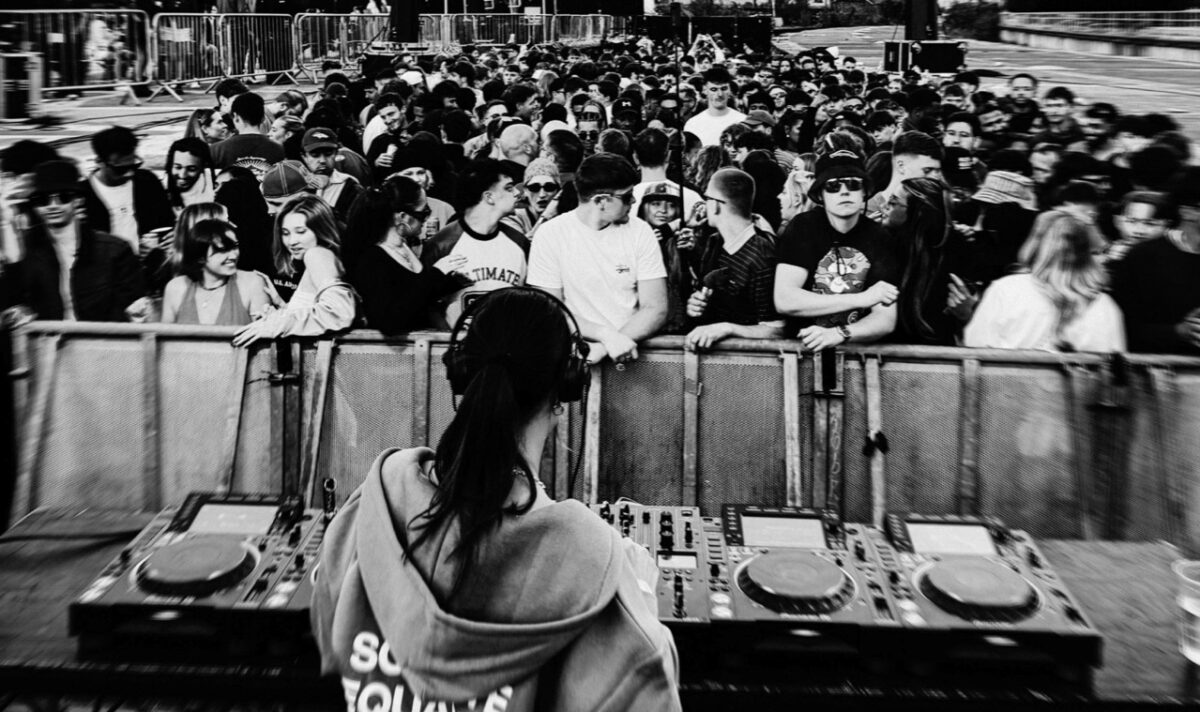
Bass has become more and more central to how I approach music. It’s the element that carries a track and has the power to move people emotionally, especially in a live setting.
When I started producing hip hop beats about 14 years ago, I really struggled with bass and figuring out how to make it sit properly in my tracks. Over time, I’ve come to love it, and I’ve realised just how crucial it is to a song’s energy. In recent years, I’ve gravitated towards darker bass tones. They can completely shift a track’s direction.
That definitely influenced the creative process behind Pure Motion.
Do you approach bass differently when you’re writing for intimacy versus when you’re aiming for club impact?
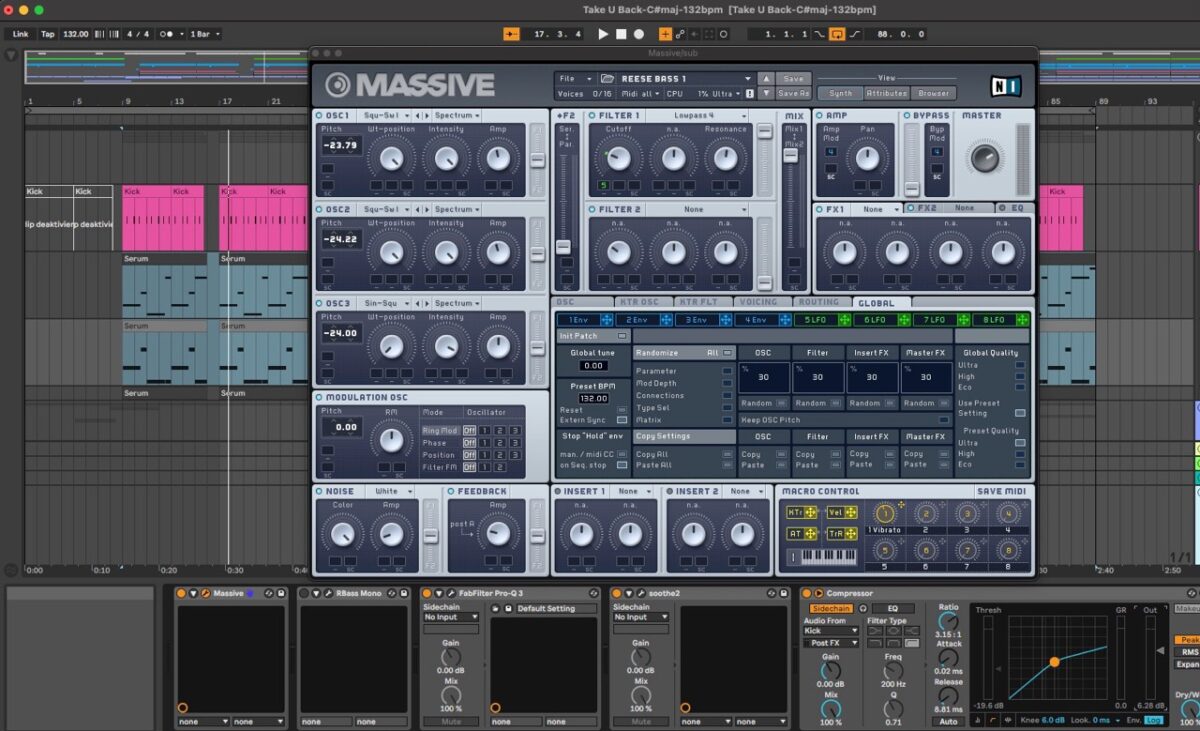
Absolutely. It always depends on the song. When I’m working on something more emotional, like “Take U Back,” the bass tends to be softer and more textural, something that subtly carries the track. For something bouncier, the tone sequence and sound design need a different kind of energy.
I just follow where the song wants to go.
When you’re building bass patches in Massive, what’s your starting point? Are there certain oscillator or filter settings you keep coming back to?

Honestly, there are already so many great presets out there.
I usually start with one of those, tweak things like the filter cutoff, and then use automation to add movement and depth. It’s less about a fixed formula and more about shaping the sound so it breathes with the track.
Massive has been around for years, yet many producers still rely on it. What keeps it relevant in your workflow compared to newer synths?

I just love its tone. The basses are so fat, and that’s something I really enjoy. Especially when it comes to Reese basses, I still can’t quite get that same texture from other synths.
There’s just something about Massive that hits right.
Do you think “Wanna See U Again” represents a new direction for how you’ll treat basslines going forward?
Not necessarily. It just felt perfect for that particular track, both emotionally and energetically. I love experimenting and trying new things, so depending on the vibe of future tracks, a similar bass style might appear again.
You might hear echoes of “Wanna See U Again” or “Rain” in future releases, but those things usually happen quite naturally. I don’t plan them in advance.
Do you think producers overcomplicate bass design nowadays?

I don’t think so. I’ve learned a lot from artists like Lawrence Hart, for instance. When I listen to his recent work, I’m fascinated by how rich and alive his bass sounds are.
It’s something I want to keep exploring and refining. That said, I think it’s important not to overthink it. In the end, the overall feeling has to be right.
That’s what really matters, I think.
Wrapping it all up
Sensu’s approach to bass captures an intuitive spirit that defines Pure Motion.
She uses Massive to bridge the space between texture and tone, leaning into its warmth to create basslines that feel alive. Every sound feels intentional, shaped to fit the emotional weight of her songs without losing the movement that drives them.
Throughout this project, Sensu demonstrates how simplicity can carry depth. Her process centers on trust. Trusting instinct, trusting sound, and knowing when to let the music breathe. That honesty translates into a record that feels immediate and timeless at once, grounded in emotion but built for the dance floor.
Thank you to Sensu for sharing her process and perspective. Pure Motion is out now on Headroom Records.
The post Why Massive still defines Sensu’s bass sound first appeared on Native Instruments Blog.
My Music Business Predictions For 2026 On My Latest Podcast
On this week’s podcast episode, I look at what the future really holds for music in 2026? In this solo episode I first look back on my predictions last year and how they landed. Then I deliver a rundown of where the industry is headed, and what musicians, producers, and [...]| Play | Cover | Release Label |
Track Title Track Authors |
|---|