
Johnny Gorillas has built a sound that moves between two different creative spaces. His solo work focuses on lo-fi textures and sample-based grooves, while his project mono sky leans toward cinematic and atmospheric production. The two projects may sound separate, but they come from the same technical foundation.
For Johnny, that foundation is Massive.
The synth became his main tool for learning how oscillators, filters, and modulation interact. Over time, this knowledge shaped how he builds tone, rhythm, and movement across any instrument he uses. Massive gave him structure and a way to create freely without guessing.
Jump to these sections:
- How Massive built Johnny Gorillas’ foundation
- Developing habits from early synthesis learning
- Maintaining continuity across creative projects
- Deciding sound identity between two projects
- Long-term growth through mastering one synth
Discover for yourself how a deep understanding of Massive can create lasting creative stability across your musical projects.
How long have you been working with Massive, and what originally made you commit to learning it in depth?
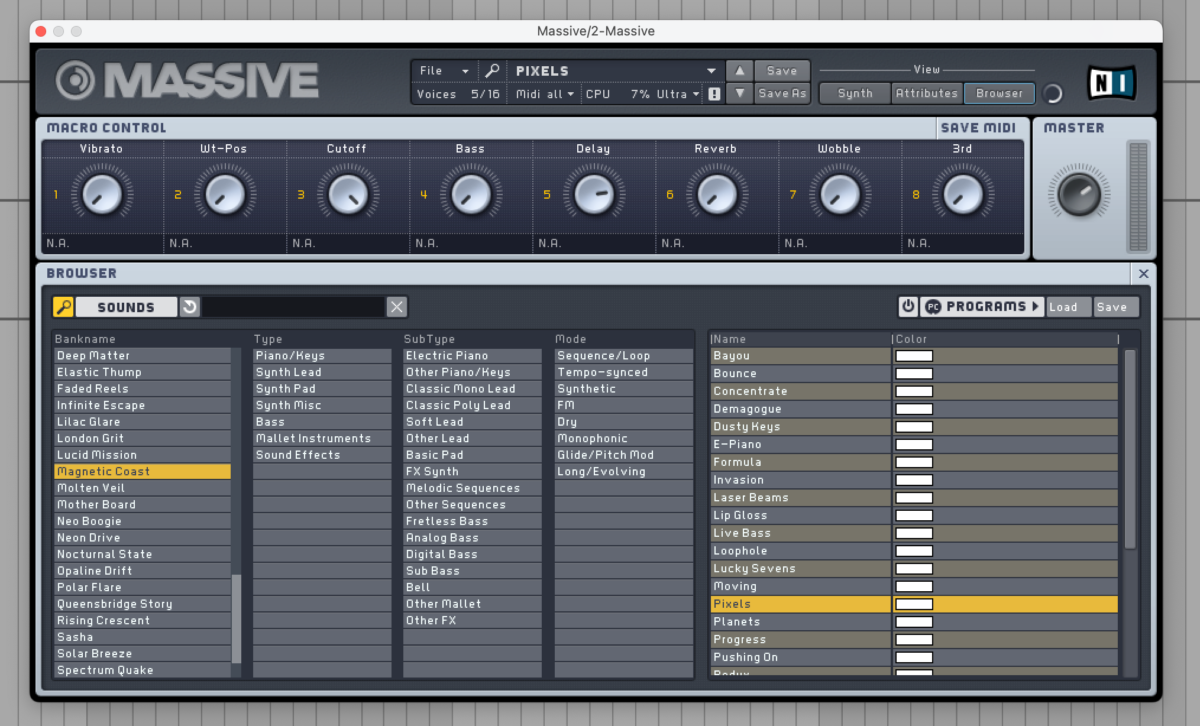
I’ve been using Massive for many years, and it was one of my main synths for a long time. When it came out, it felt like the clearest and most modern VST synth available. There were plenty of vintage emulations, but Massive was the synthesizer that felt genuinely contemporary and capable of almost anything. The interface made immediate sense to me, which encouraged me to go beyond presets and start building my own patches very early on.
Another reason I learned it deeply was my live work. I’ve always played keyboards in different bands, including cover bands where you constantly need to recreate specific sounds. Massive was perfect for that: flexible enough to build any style of patch I needed, and reliable on stage.
Even recently, when I changed my live rig for logistical reasons, I sampled some of my Massive patches because they were simply too fat to recreate on the hardware.
That shows how central Massive has been to my sound design workflow over the years.
When you open Massive today, what habits or workflows come from those early years of learning the synth?
The first habit is to start with an initial patch. I love that Massive opens with something clean rather than an overproduced preset. It immediately tells me to go build what I want. That mindset comes directly from my early days learning synthesis through Massive.
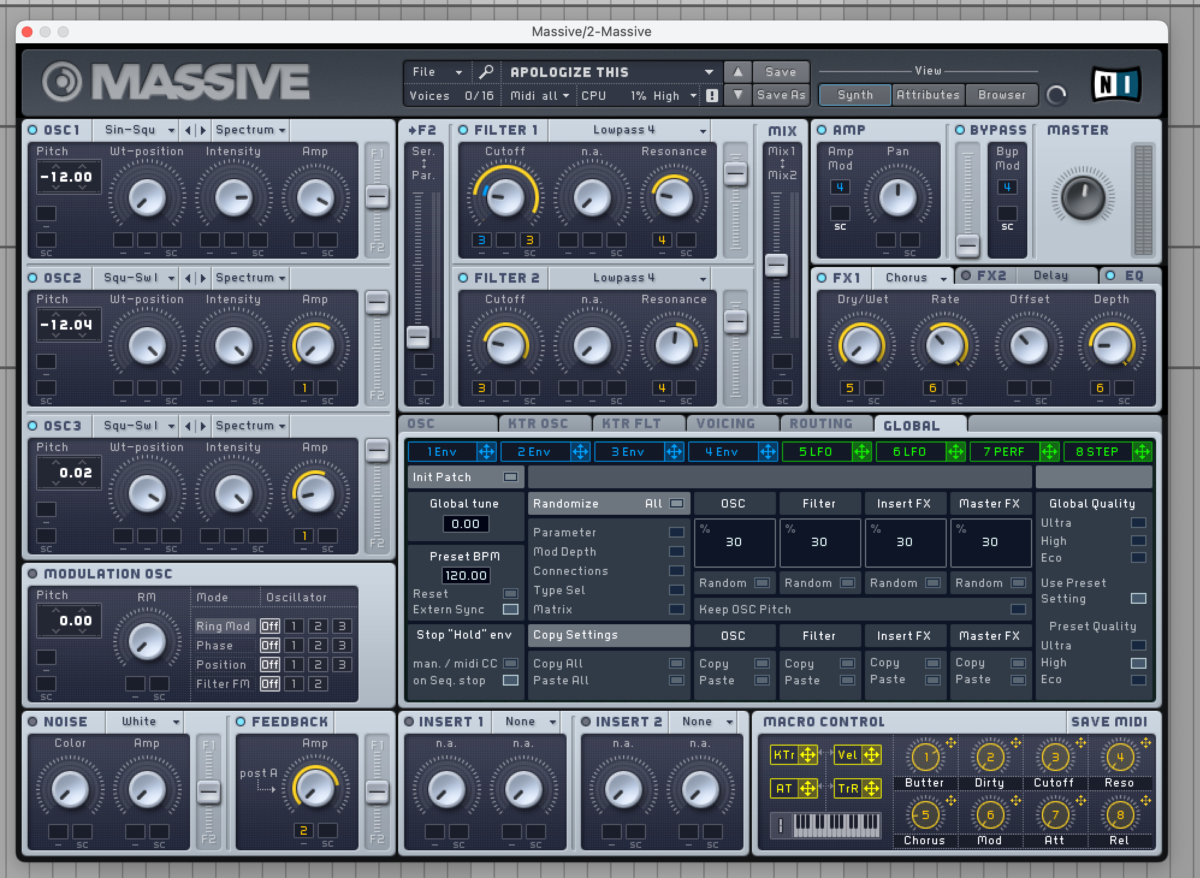
The overall layout still shapes how I work: three oscillators plus noise on the left, two filters, four envelopes, and four LFOs in consistent positions, and straightforward modulation assignment. Back then, this workflow made synthesis approachable for me. Today, it still speeds up patch creation because I don’t have to think about where anything is.
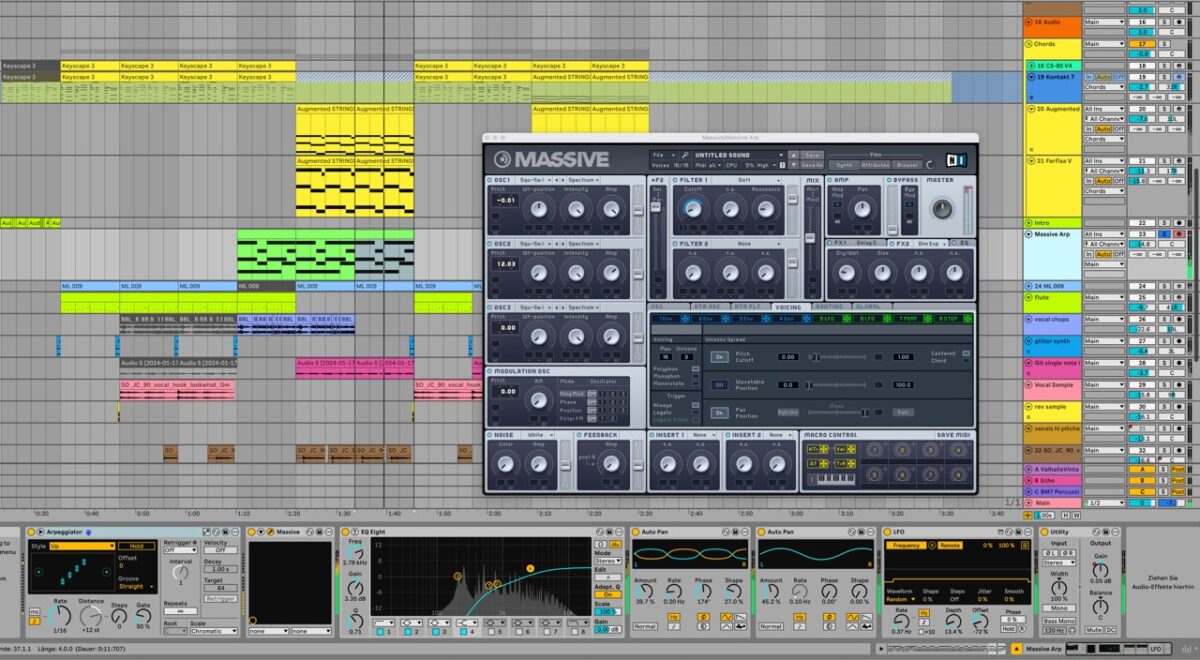
Even though I use a wide range of synth plugins these days, I still use Massive regularly – and the habits I built with it translate to pretty much any synth I work with.
Pro tip from Johnny Gorillas: Start from an init patch. It forces you to design instead of just tweaking. You understand every part of the sound, and the patch becomes yours, not an accident.
In what ways do your years of experience with Massive help you maintain continuity across projects without repeating ideas?
Working with one synth for so many years teaches you the fundamentals of sound design in a transferable way. A lot of what I learned in Massive, thinking in oscillators, filters, envelopes, and modulation first, is something I can now apply to any other synth, software, or hardware. This means I can stay consistent in the way I build sounds, even if the tools change.

At the same time, knowing a synth really well helps you avoid repeating yourself. Because I understand how Massive reacts to different routings or modulation depths, I can push textures in new directions instead of stumbling into the same patterns over and over. Instead of relying on habits, I can intentionally break them because I understand the system behind them. That keeps continuity across my work, but not sameness.
Pro tip from Johnny Gorillas: Use Unison/Voicing early. Width, detune, and stereo spread shape the entire vibe before you even start fine-tuning envelopes or filters.
How do you decide when a sound belongs to Johnny Gorillas versus when it fits mono sky?
To be honest, that’s not something I do.
The projects differ enough in workflow and intent that I haven’t encountered a situation where moving a patch from one to the other made sense. Usually, I start fresh based on the musical idea rather than adapting an existing patch.
If I ever did translate something, I imagine I’d reshape the patch heavily to fit the different musical aesthetic. But so far, it hasn’t come up in my process.
Pro tip from Johnny Gorillas: Don’t underestimate the built-in effects – especially the Dimension Expander. It’s one of my favorite ways to add space and bring a digital synth patch to life.
Looking at the evolution of both artist projects, how has your mastery of Massive shaped the long-term development of your sound?
Massive was one of the tools that taught me synthesis in a structured, straightforward way.
Because it was so intuitive, it helped me understand what oscillators, filters, envelopes, and modulation actually do in a musical context. That shaped not just my Massive patches, but my entire approach to sound design across plugins and hardware.
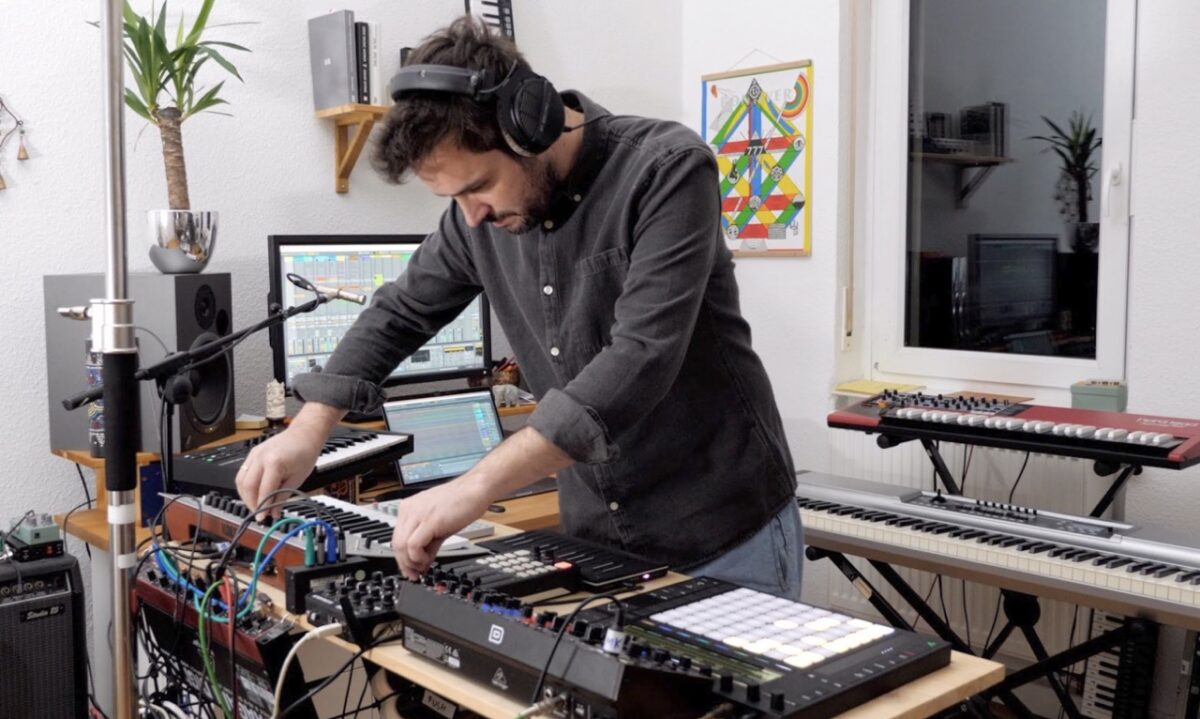
Even now, when Massive isn’t always the first thing I reach for, that foundation is still present. The sounds I build for mono sky, evolving chords, atmospheric textures, and constantly shifting timbres, all benefit from years of learning how to create and control movement in Massive. And for Johnny Gorillas, Massive (and now Massive X) still provides quick, high-quality building blocks I can adapt easily because I know how the instrument behaves.
So even indirectly, Massive has contributed a lot to how both projects sound today.
Pro tip from Johnny Gorillas: Learn one synth deeply. That knowledge transfers to every other synth you use later.
Wrapping it all up
Johnny Gorillas’ understanding of synthesis gives him the freedom to explore new sounds while staying grounded in his technical foundation. His years inside Massive taught him to think about music as layers of energy and movement instead of isolated sounds.
That mindset connects his work across both projects and keeps each idea focused.
For producers who struggle to balance multiple styles, his process is a reminder that consistency comes from depth, not variety. Learn one tool completely, and it becomes part of how you think. Every project, every sound, every idea starts to feel connected.
Arturia Pigments 7 review: “Almost a no-brainer at $199”
$199 ($99 introductory price) Free upgrade for existing users arturia.com Pigments has become a crucial synthesizer for Arturia since its release in 2018. Although the French manufacturer had built such a stellar reputation with its analogue modelling technology and plugin recreations of classic synths, Pigments represented a move away from [...]| Play | Cover | Release Label |
Track Title Track Authors |
|---|